Choosing the right size tiles
Tile sizes: how to choose?
Although there are no universally recognised parameters, tiles can generally be classified according to their dimensions as follows:
-
Small tiles
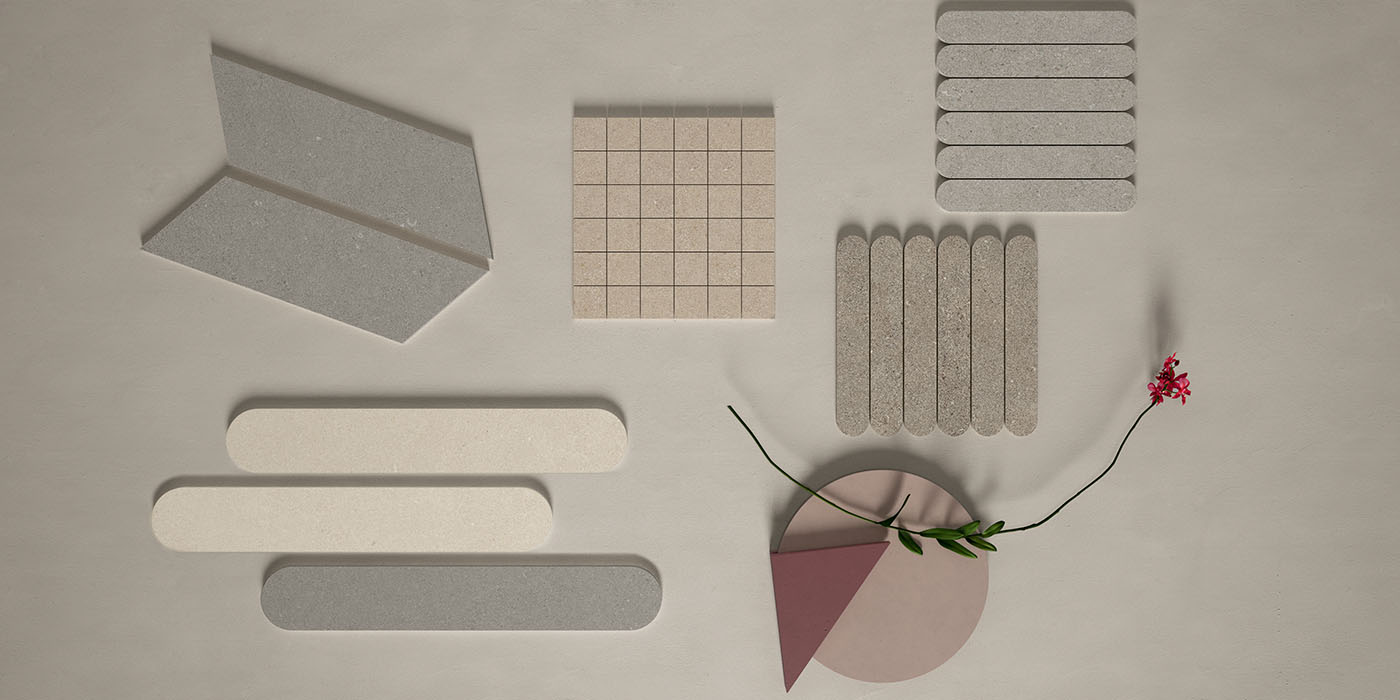
These are tiles smaller than 30x30 cm, including mosaics and ceramic brick-effect pieces. Small-format tiles often offer a wide variety of colours, decorations and finishes and are well suited to many different spaces, especially for wall applications.
-
Medium-format tiles
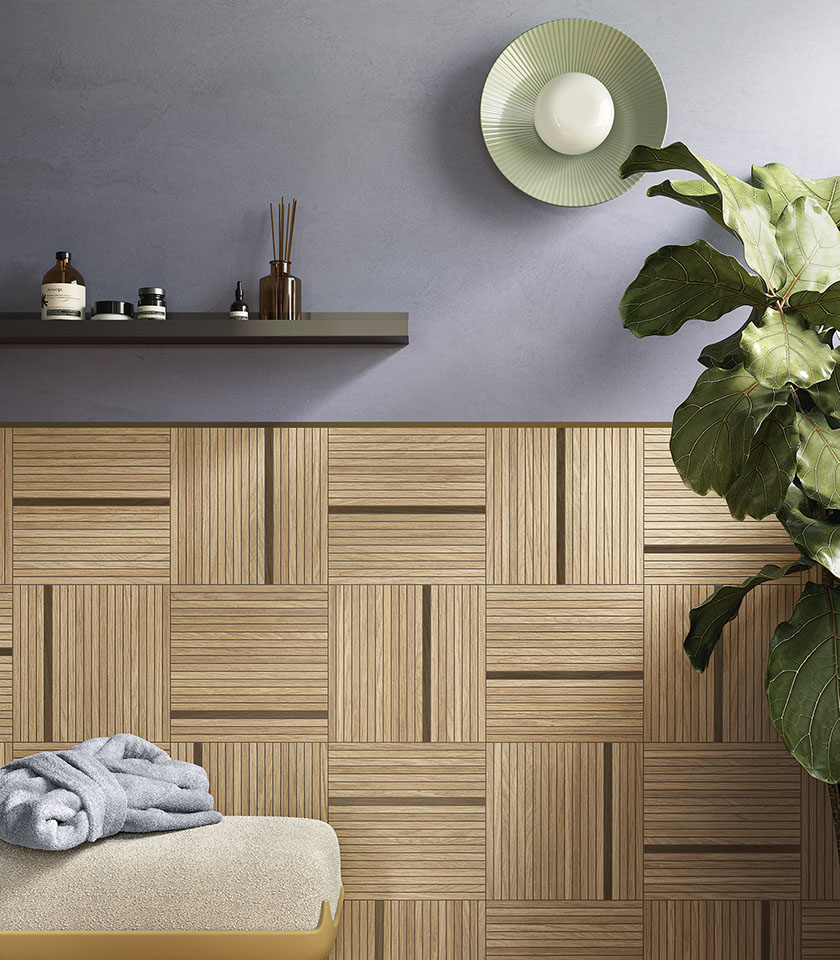
Up until around twenty years ago, the 60x60 cm format was considered the dimensional threshold to surpass. Today it is regarded as a small-to-medium format, to the point that many manufacturers no longer include it in their ranges, preferring 75x75 cm or 80x80 cm instead. Among medium formats, however, 30x60 cm remains widely used, particularly for wall applications thanks to its versatility.
-
Large-format porcelain stoneware
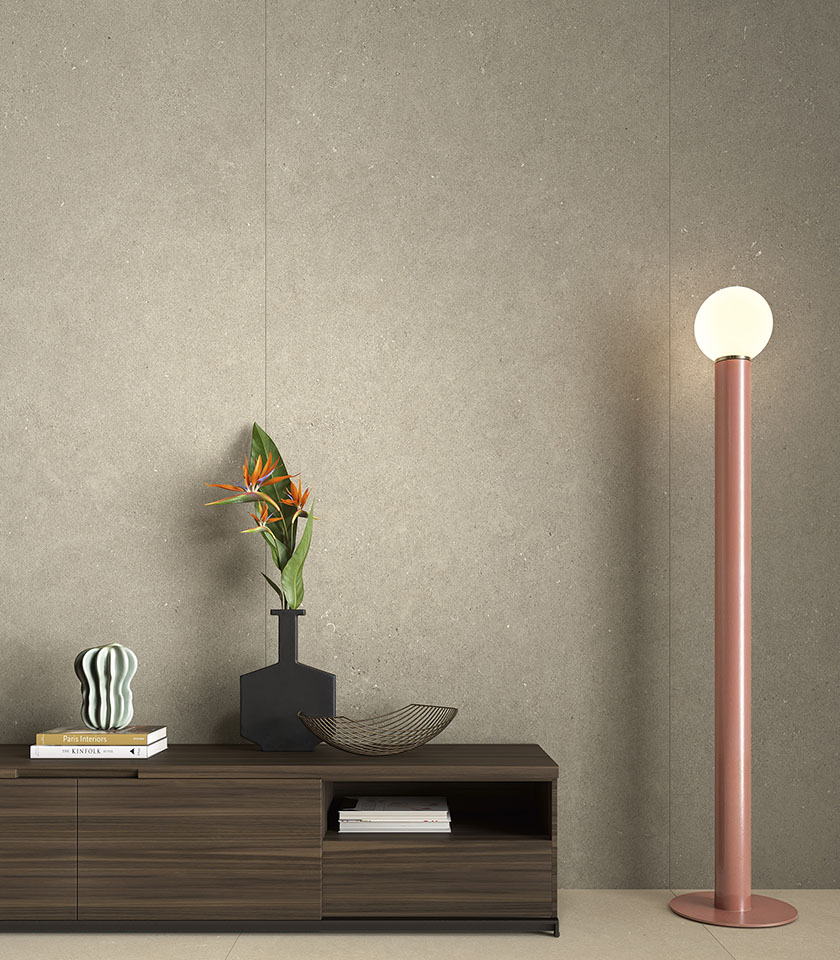
Large formats are in particularly high demand today for a number of reasons. For example, they reduce the number of grout lines, creating a more seamless and continuous visual effect, while also allowing graphic patterns and colour nuances to be expressed to their full potential. Despite their sometimes impressive dimensions, they also offer excellent flatness.
-
Laminated porcelain stoneware slabs
Developed through a new production process introduced around twenty years ago, laminated porcelain stoneware is produced in slabs so large that they go beyond the traditional concept of a fixed format, since no moulds are used in the manufacturing process. From the original 100x300 cm and 120x278 cm sizes, countless smaller formats can easily be obtained. Large slabs can be installed both on floors and walls. When the largest format is laid vertically, it can cover the full average height of a residential floor. Naturally, these slabs can also be used as external cladding for entire buildings, as well as for covering worktops and furniture.
To choose the right tile size, the first question to ask is: how large is the area I need to tile? Once this crucial point has been established, other questions naturally follow. Let us look at the most important ones.
Square or rectangular?
What may seem like a matter of taste alone also depends partly on the characteristics of the surface to be covered and partly on the tile effect chosen. When selecting the right size, it is important to consider:
-
The geometry of the surface to be covered
Long, narrow rooms are enhanced by rectangular formats, while large, airy spaces can emphasise their sense of openness when square tiles are used on the floor. On walls, this general rule must also take into account the height of the room and the size of the area to be covered, but the principle remains essentially the same. It can, however, be deliberately overturned to create particular effects, for example in a bathroom with a low wall covering. If the tiling stops at 120 cm from the floor, the ideal solution is to install ceramic wood-look planks or 60x120 cm tiles vertically, reducing the number of grout lines and eliminating cross joints.
-
The chosen look
Some ceramic effects are better expressed by rectangular tiles, others by square ones, while in some cases the format does not directly affect the overall style. A stone with parallel veining or a directional marble effect, such as travertine, will be enhanced by a rectangular format, regardless of whether you choose large tiles or small tiles.
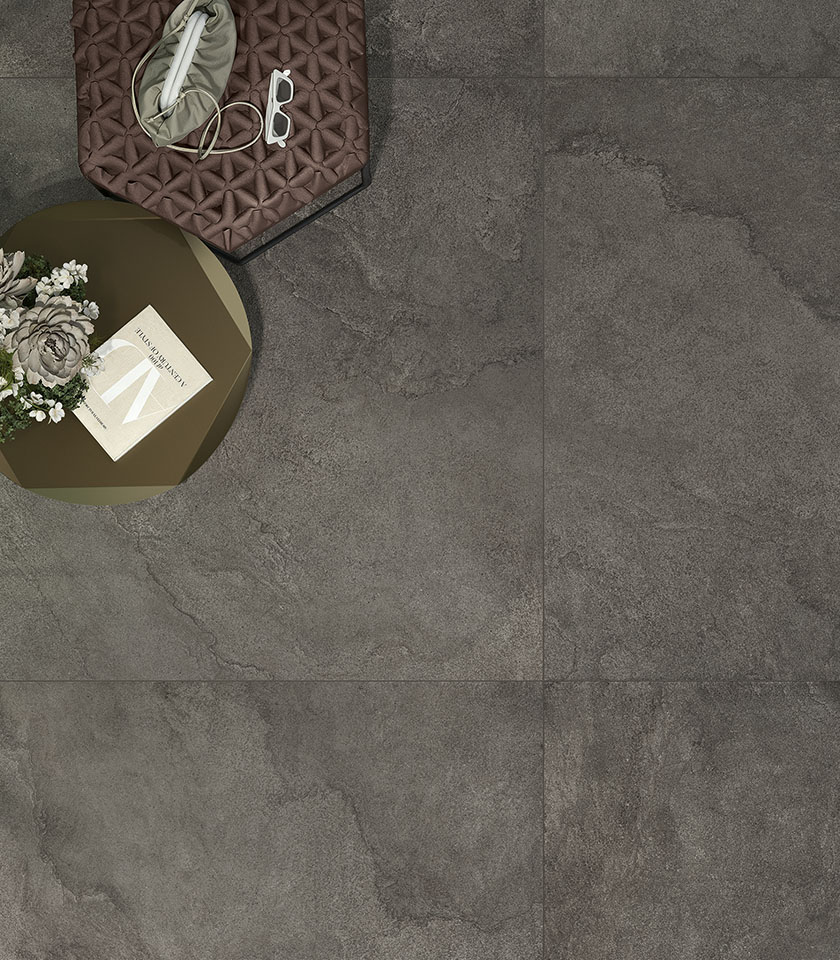
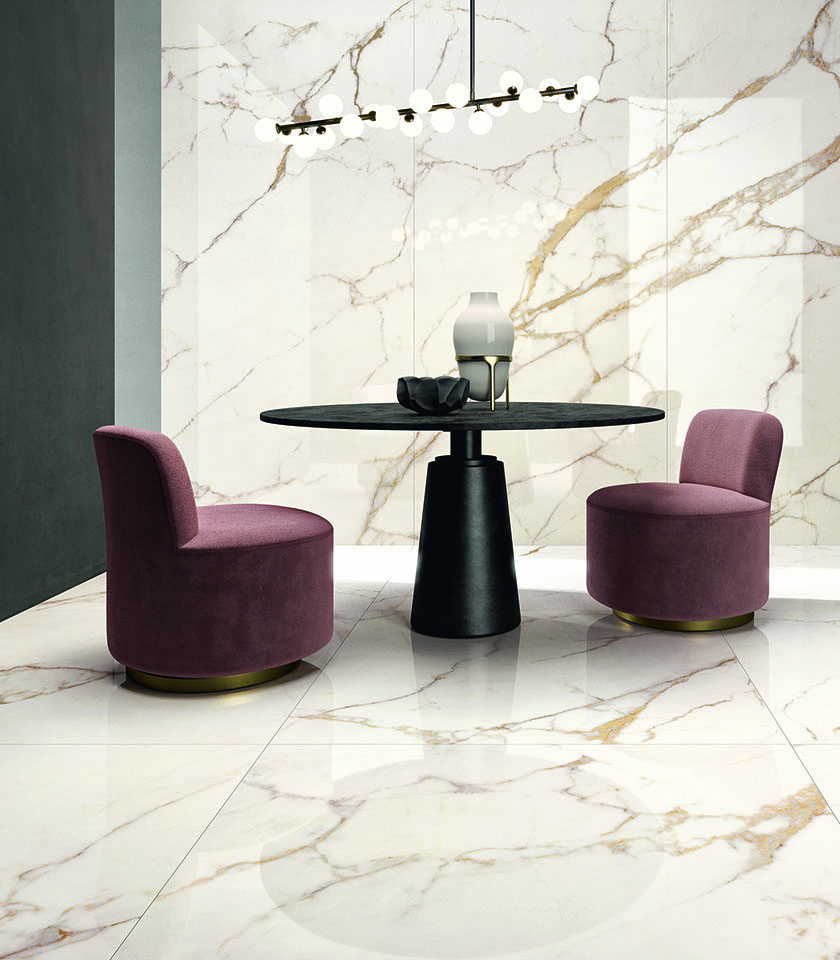
Here are a couple of practical examples to better understand how to enhance each style:
- Thanks to its graphic pattern, a marble effect such as Calacatta Oro is enhanced by both square and rectangular formats.
- By contrast, Venato Bianco, while offering a similar effect, has a more directional appearance, albeit running transversely. In this case, if you choose a square format, for example 120x120 cm with a thickness of 6 mm, it is best to alternate tiles laid in one direction with tiles rotated by 90°, creating a checkerboard pattern. In this way, the square format finds its ideal expression in a design motif with centuries of history.
Alongside classic shapes, there are also more modern geometries, or forms rediscovered in recent years, such as hexagons, diamonds and chevrons, which add a sophisticated and original touch to both floors and walls.
Flooring: large or small tiles?
The larger the surface to be tiled, the more advisable it is to opt for large tiles. Larger formats reduce the number of grout lines and maximise the aesthetic impact of the chosen look. These visual effects can significantly influence the overall design of a space, reaching their fullest expression in large thin slabs, which further enhance the aesthetic benefits of larger formats.
Choosing small tiles for the bathroom certainly makes sense, as the room itself is generally fairly compact. Small formats can also be a deliberate design choice in the case of hexagonal tiles, largely monochromatic effects or looks traditionally associated with smaller sizes. One example is terracotta: in its handcrafted form, this material rarely exceeds 30 cm per side.
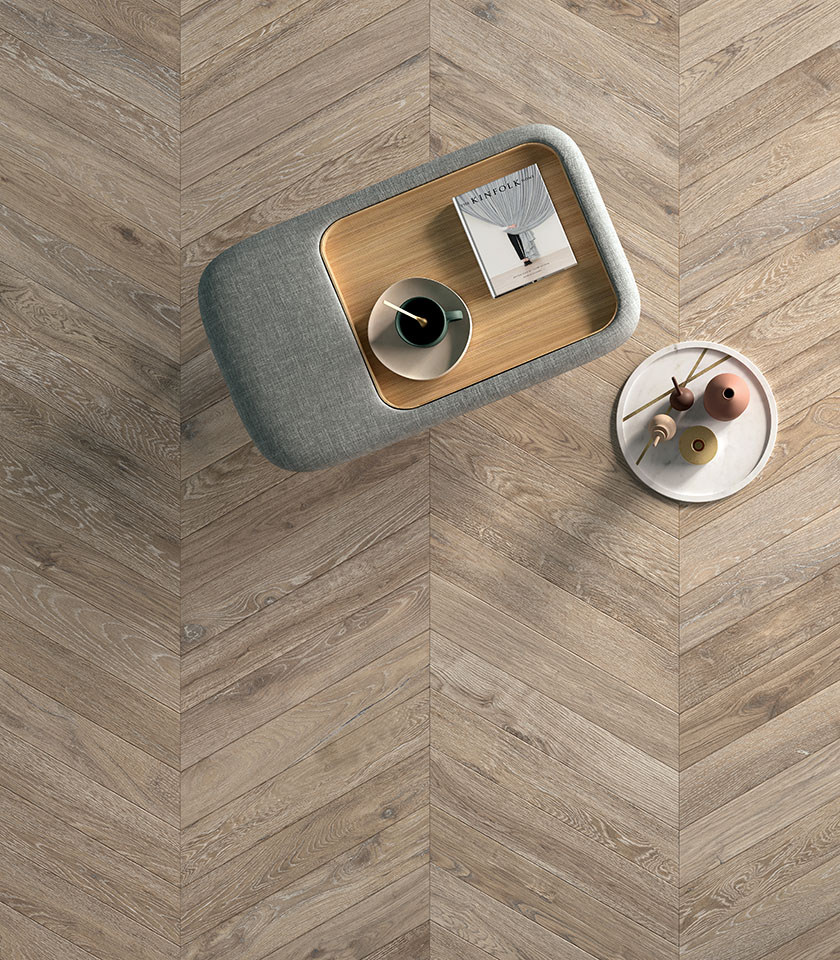
Finally, there is one special format that can be used for floors of virtually any size: the chevron. It introduces a design element that is both historic and extremely contemporary. Its shape combines the graphic pattern with a grid created by the grout lines, adding dynamism and elegance to the floor.
Large-format porcelain stoneware: can it be installed without grout lines?
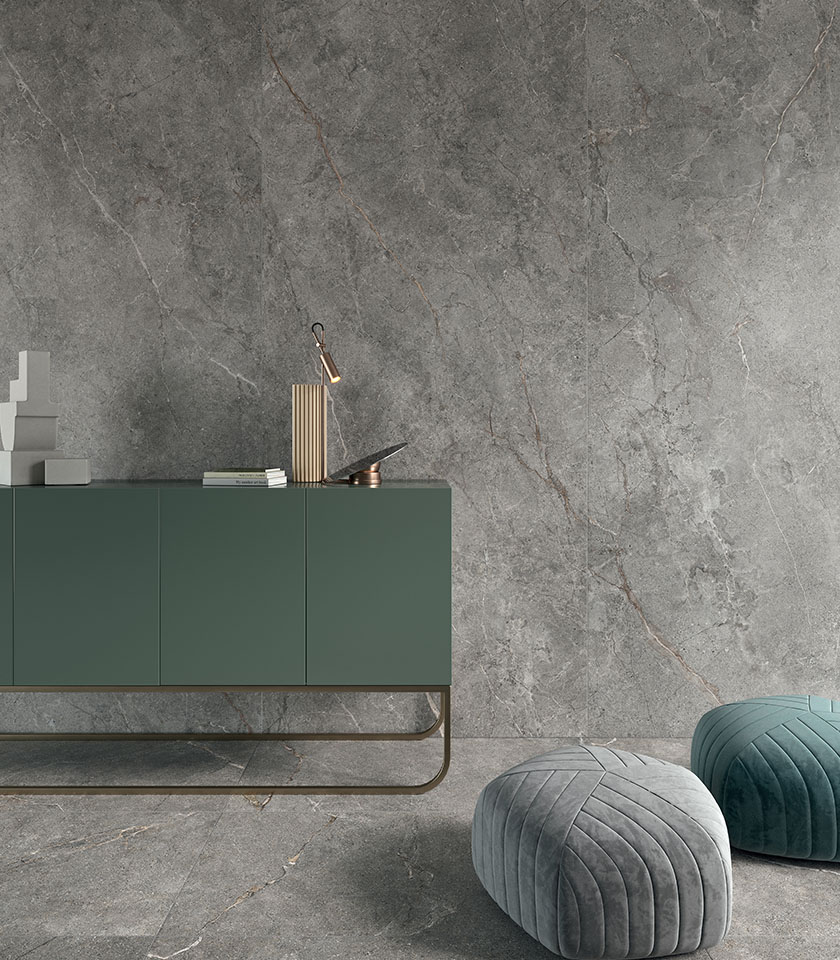
Certain ceramic effects, such as the concrete look, are so realistic that they may tempt you to choose large-format floor tiles without grout lines. However, this is a mistake to avoid. Grout joints are always necessary because, even when reduced to a minimum, they absorb the micromovements that occur over time in any architectural structure.
Grout joints also greatly reduce lippage, the slight difference in height that can sometimes occur between one tile and another where they meet. These very small uneven areas can have several causes: they may depend on the substrate, the adhesive layer or the fact that the ceramic surface is not perfectly flat. In any case, they can be minimised first and foremost by relying on an experienced installer and by allowing for grout joints during installation. Leaving just a few millimetres between tiles greatly reduces the height difference between adjacent formats, which is already very limited when installation is carried out correctly.
All Lea Ceramiche formats are rectified. This means that, at the end of the production process, each of the four corners of a square or rectangular tile is perfectly square, as is the angle where the surface meets the edge. Because they are rectified, the tiles can be installed very close together, with a minimum grout joint of 2 or 3 mm, excluding expansion joints, of course. With joints this narrow, especially when using large formats or even slabs, the number of visible joints is greatly reduced and they become much less noticeable. If the grout is also matched to the tile colour, the illusion of a continuous material surface is almost complete.
Lea Ceramiche: not just large formats
Lea Ceramiche is known for its strong design focus, which is often expressed through large-format tiles or even Slimtech laminated porcelain stoneware slabs, a technology you can explore here. However, the brand’s catalogue also includes a perfect example of a small format, from the Pigmenti series: the 12 colours developed by Ferruccio Laviani are also available in a brick format measuring 8.2x24.9 cm, paired with a strip twice as long at 8.2x50 cm.
And then, of course, there are the large formats:
- The Concreto series, winner of the Good Design Award, features a concrete effect designed by Fabio Novembre which, in the traditional 9 mm thickness, is available in a 90x90 cm format.
- Side Stone, on the other hand, is a stone effect inspired by Ceppo di Gré and, in the same thickness, is available up to 120x120 cm.
- Alongside the 60x120 cm size, this large format also characterises the Masterpiece series, conceived by Ferruccio Laviani with a dual aesthetic: concrete (Master) and Venetian terrazzo (Piece).
If, after reading this short guide to choosing the right format, you still have some doubts, the best thing to do is see how the different sizes look once installed. How? Very simply, with the Real configurator, a 3D visualisation tool that allows Lea Ceramiche surfaces to be applied to a living room or bathroom. As you will see, the design of these spaces, which can differ greatly in size, is significantly influenced not only by the chosen ceramic effect but also by the dimensions of the format.
By subscribing to the newsletter, you will receive exclusive promotions dedicated to you.