Protoshop Lamborghini
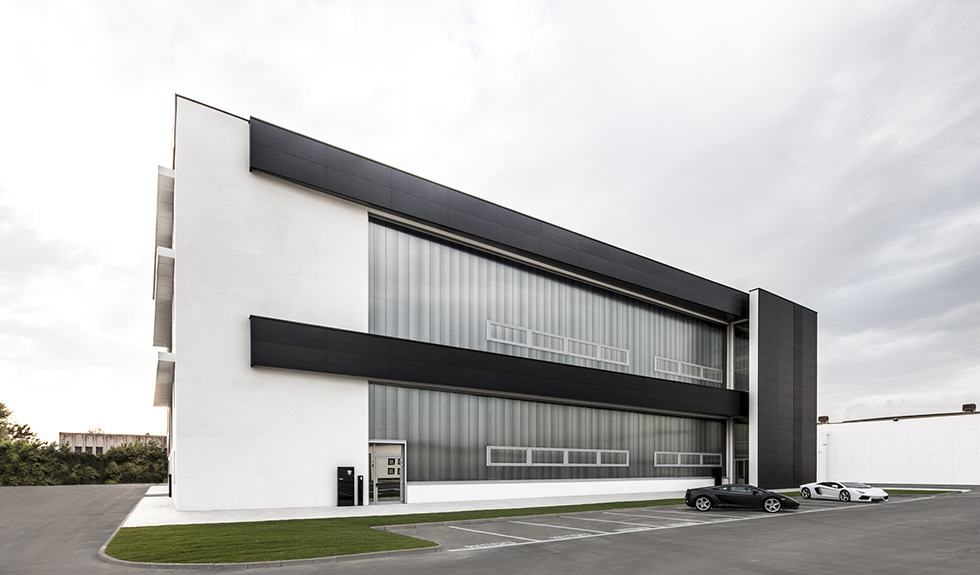
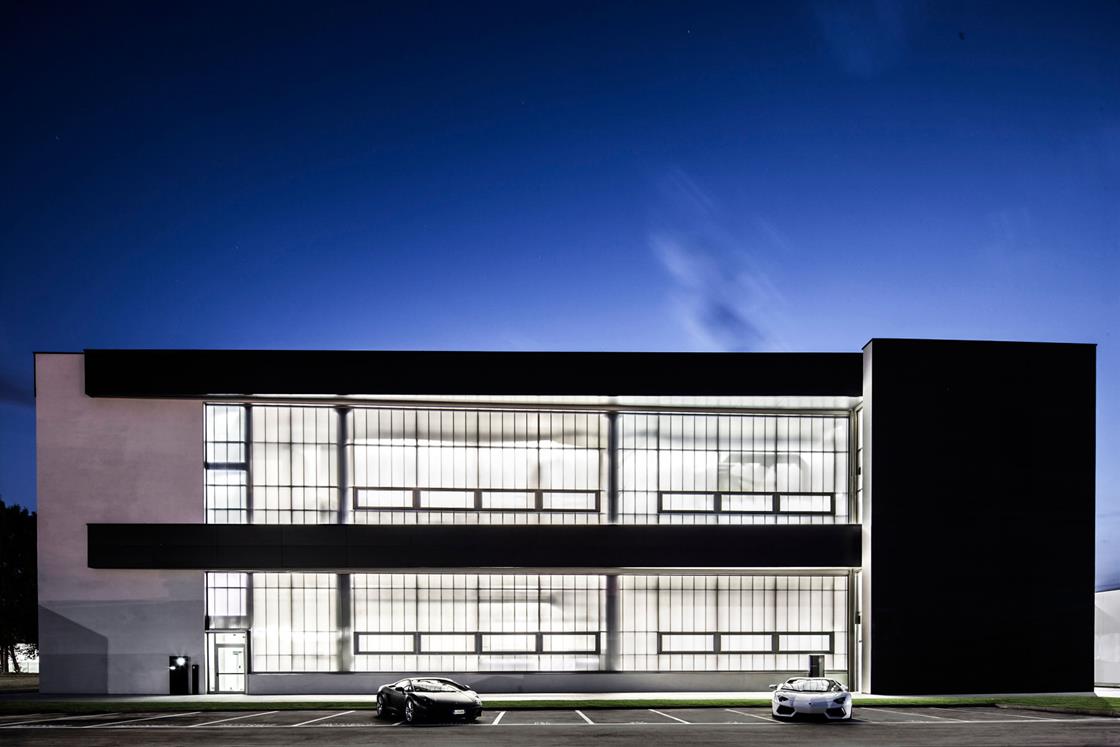
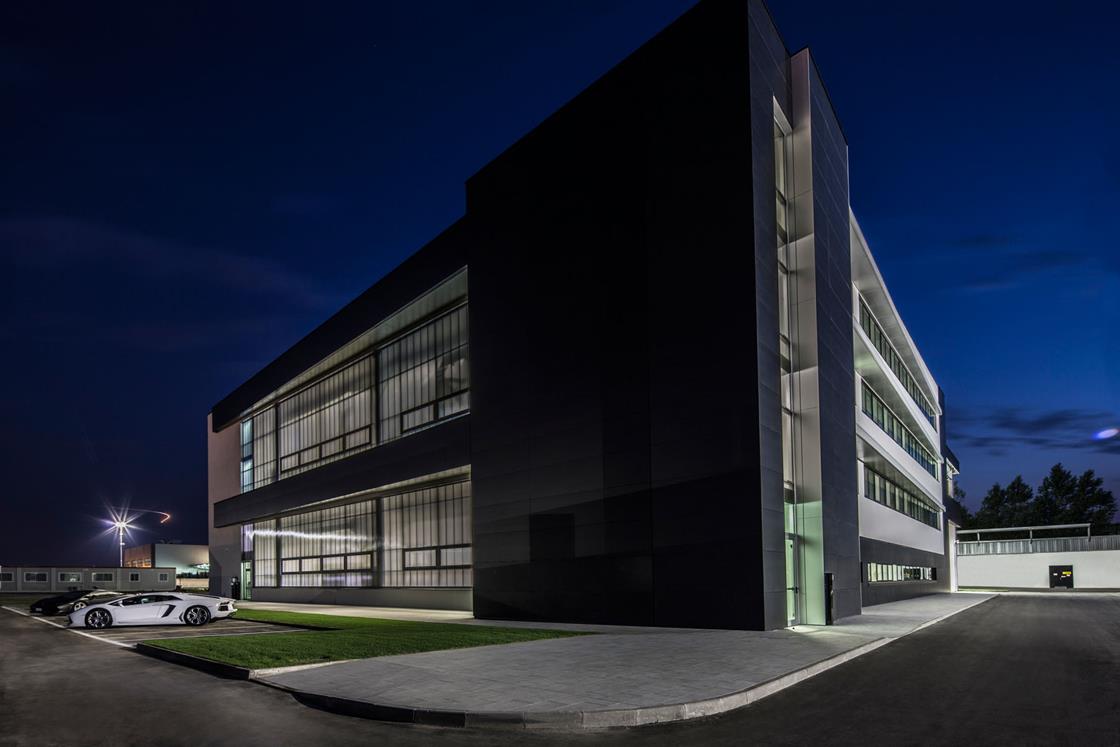
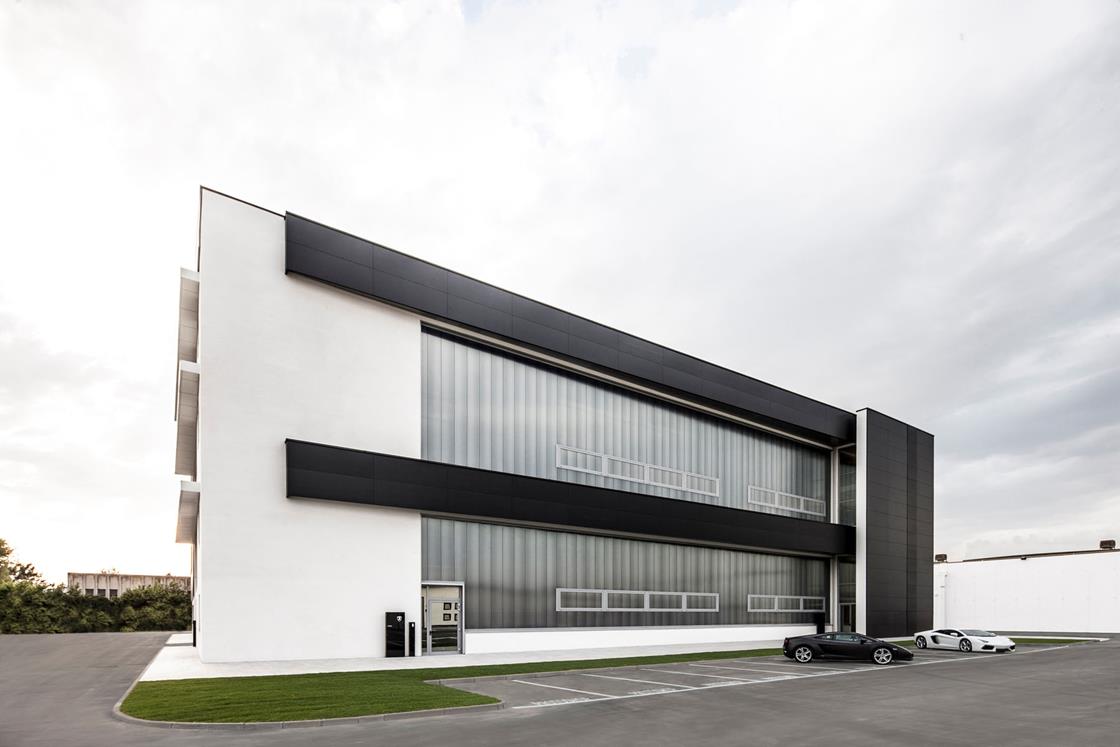
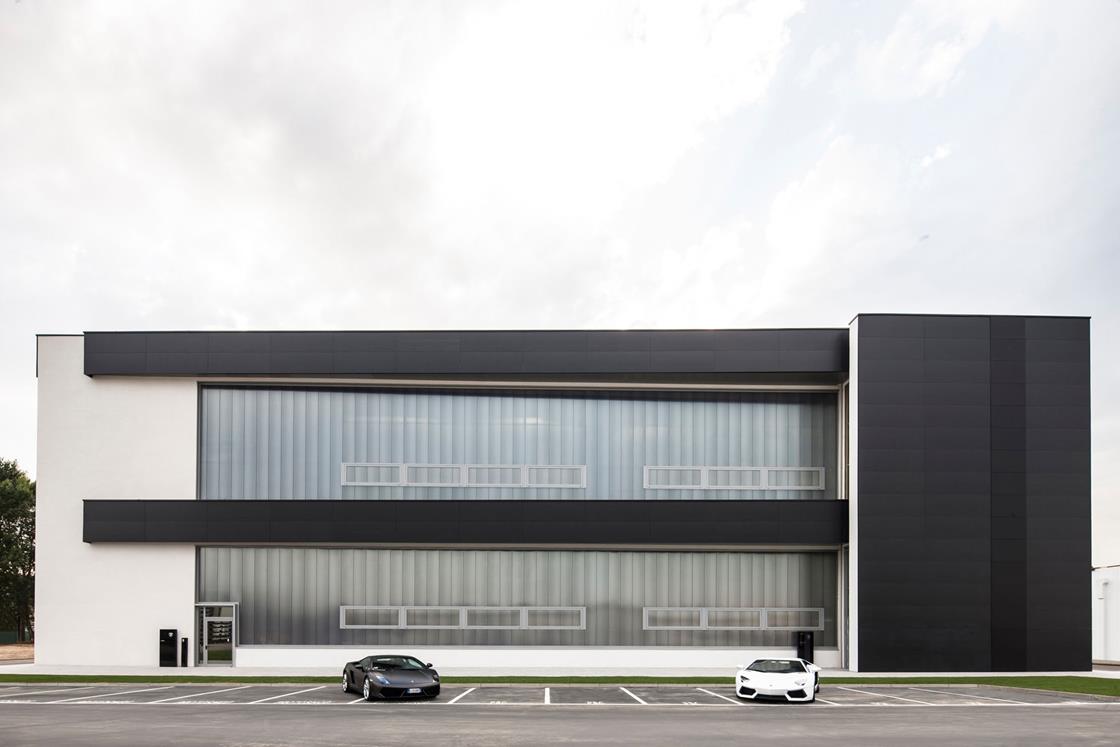
Lamborghini’s Protoshop is the first multi-storey Class A industrial building in Italy: covering almost 5,000 sqm, it houses the famous car manufacturer’s “Prototypes and Pre-Series” department. The project was developed by the Modena-based architecture studio Prospazio, with the collaboration of Lea Ceramiche for the cladding of the ventilated façade using ultra-thin Slimtech slabs, 3.5 mm thick and in an oversized 3 x 1 m format.
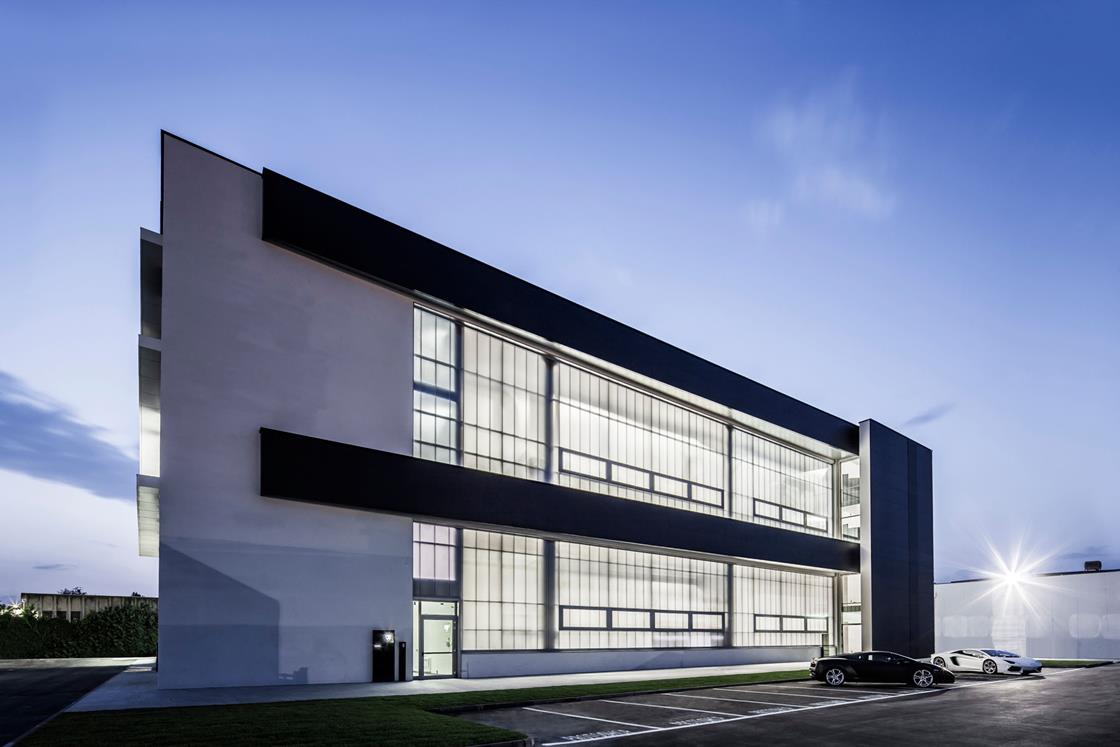
Design, safety and energy saving are the most significant elements developed by Prospazio in an architectural and engineering project that embodies Lamborghini’s extreme and uncompromising style. Sharp forms, a muscular character and angular lines form the basis of the architectural concept, transforming a simple industrial volume into a building with a strong identity. The reinforced concrete structure and the geometric design of the three rigid stairwell cores outlining the triangular shape of the building ensure safety, strength and stability. The choice of cladding materials also fell on a highly innovative, state-of-the-art product: Slimtech by Lea Ceramiche. 100% eco-compatible, with reduced atmospheric emissions, efficient use of natural resources, savings in transport and packaging, reduced waste and refuse, and optimisation of energy performance.
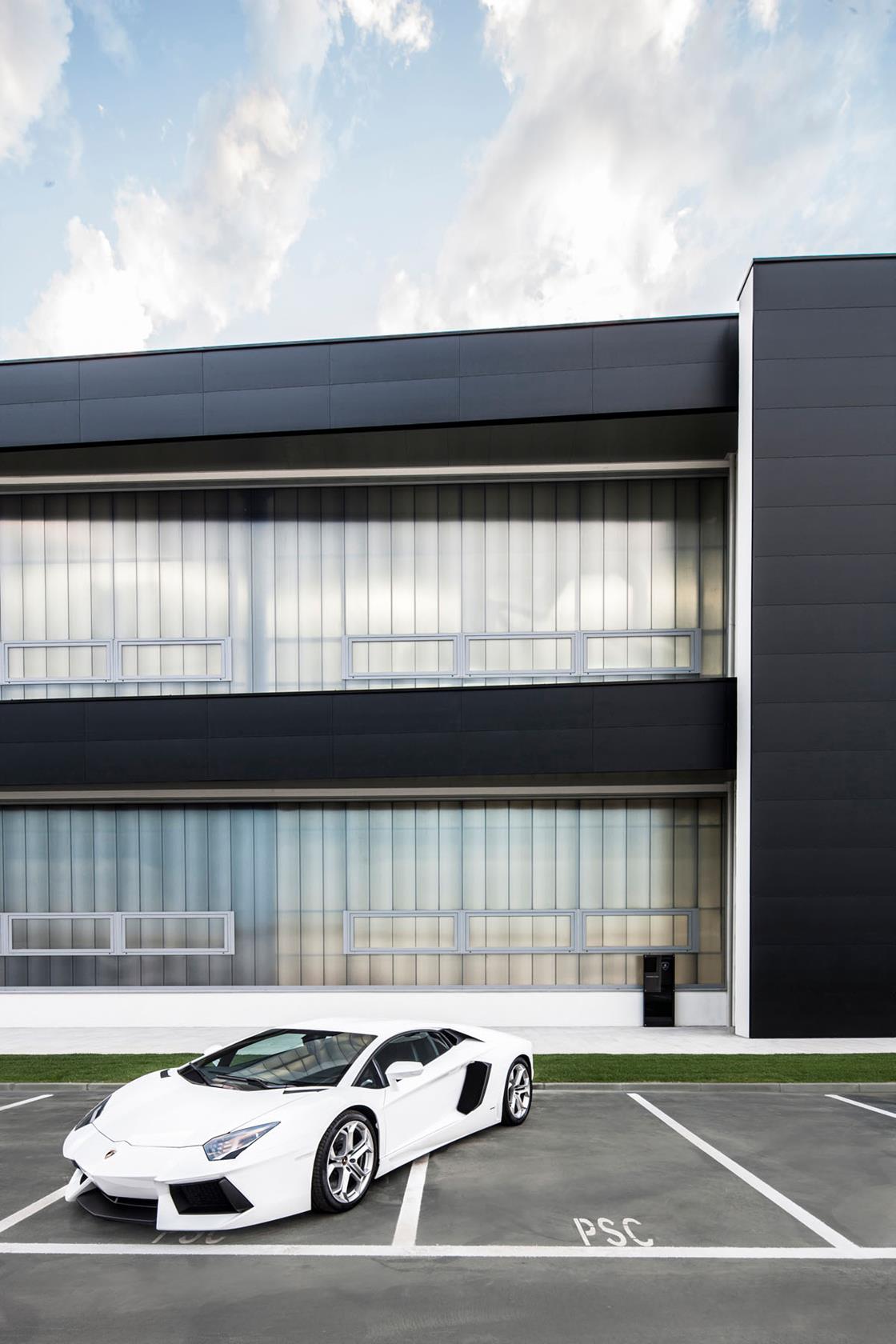
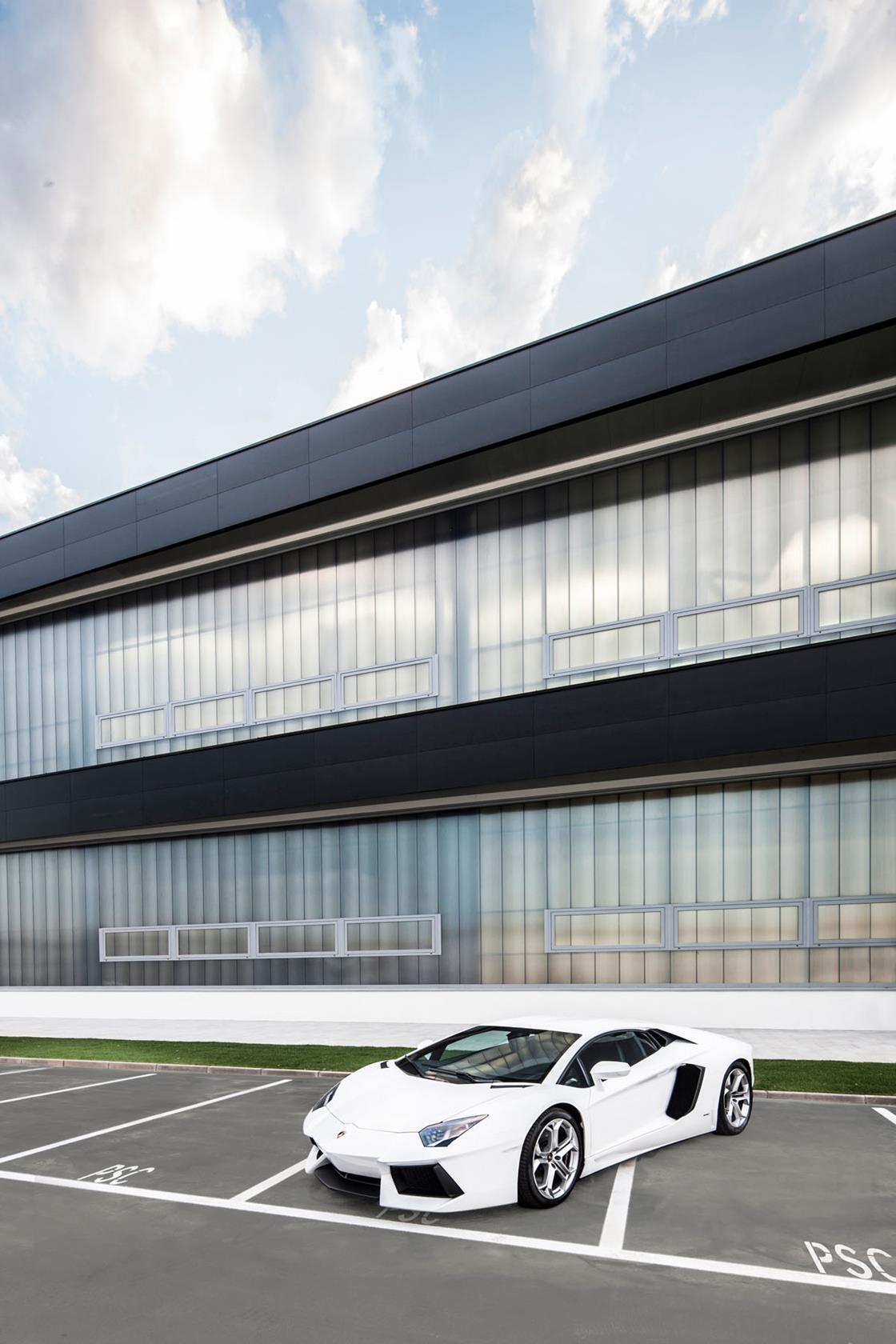
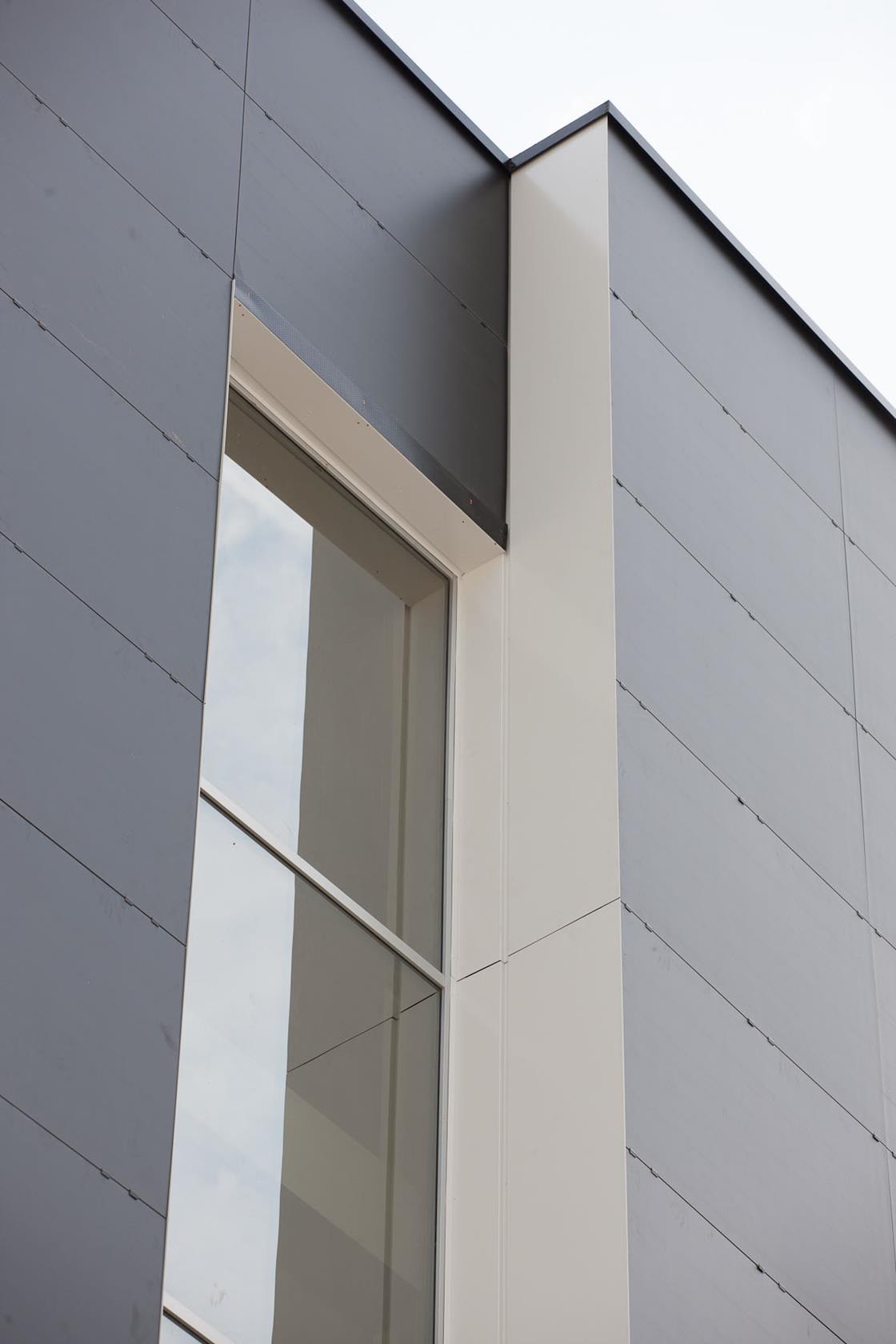
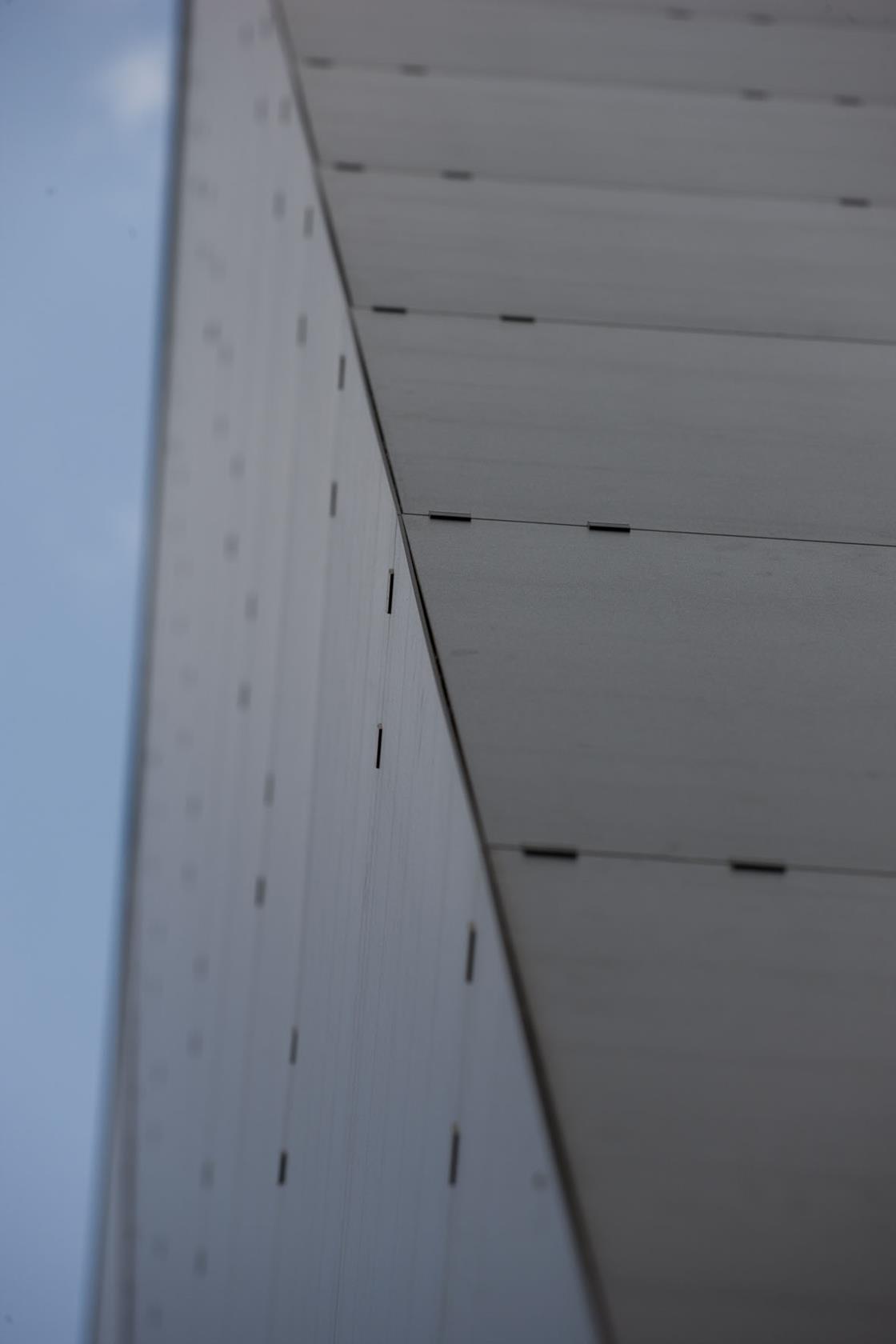
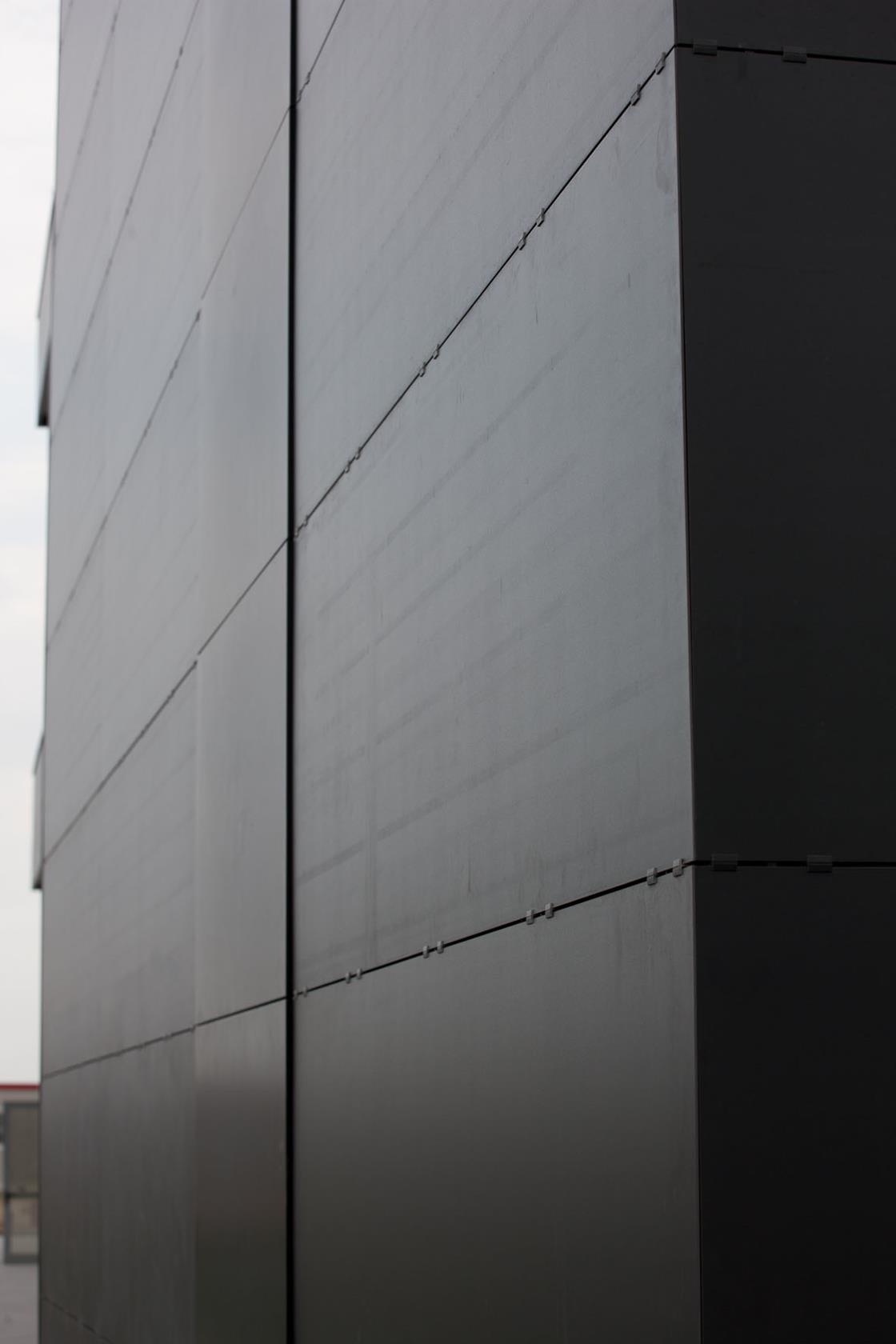
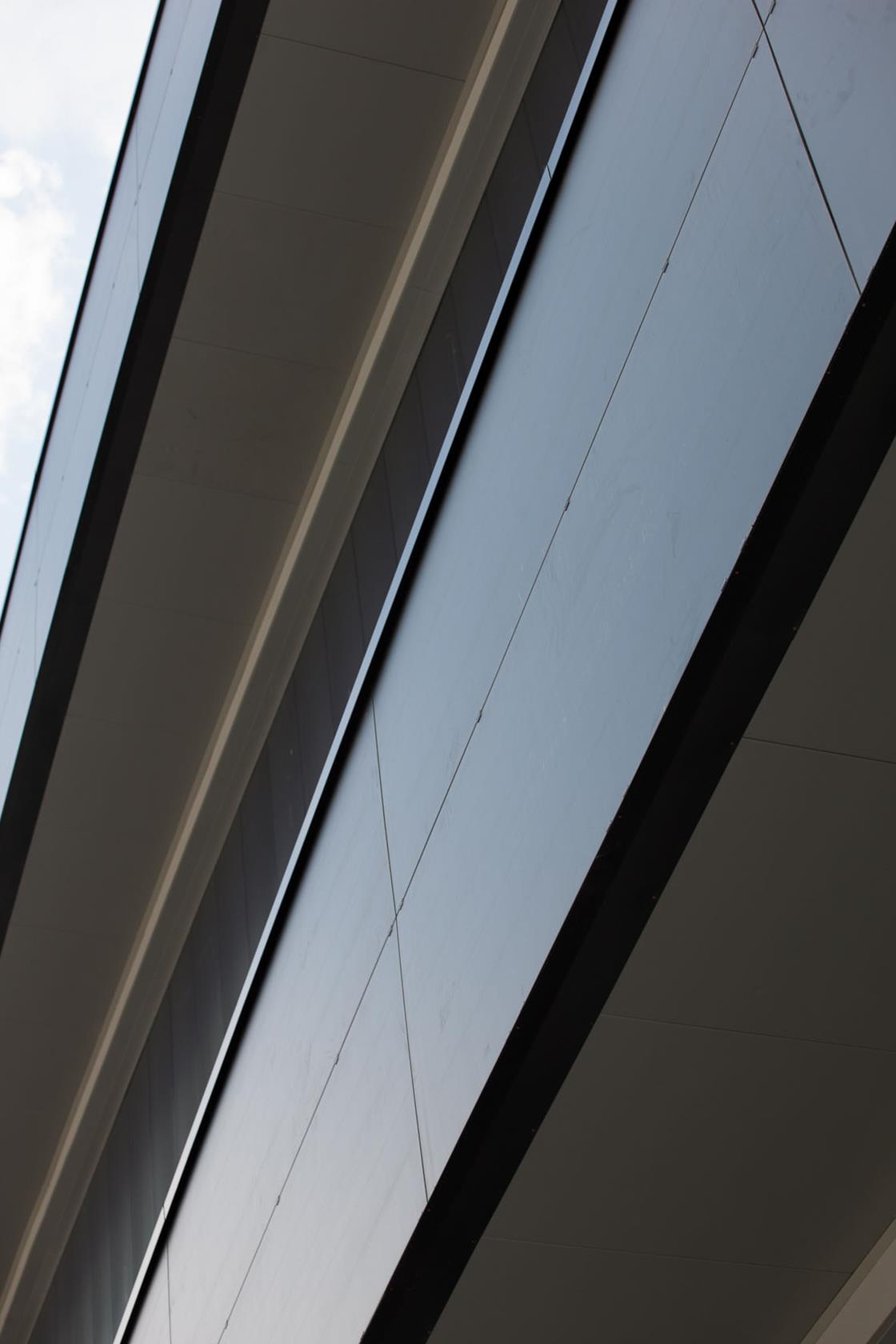
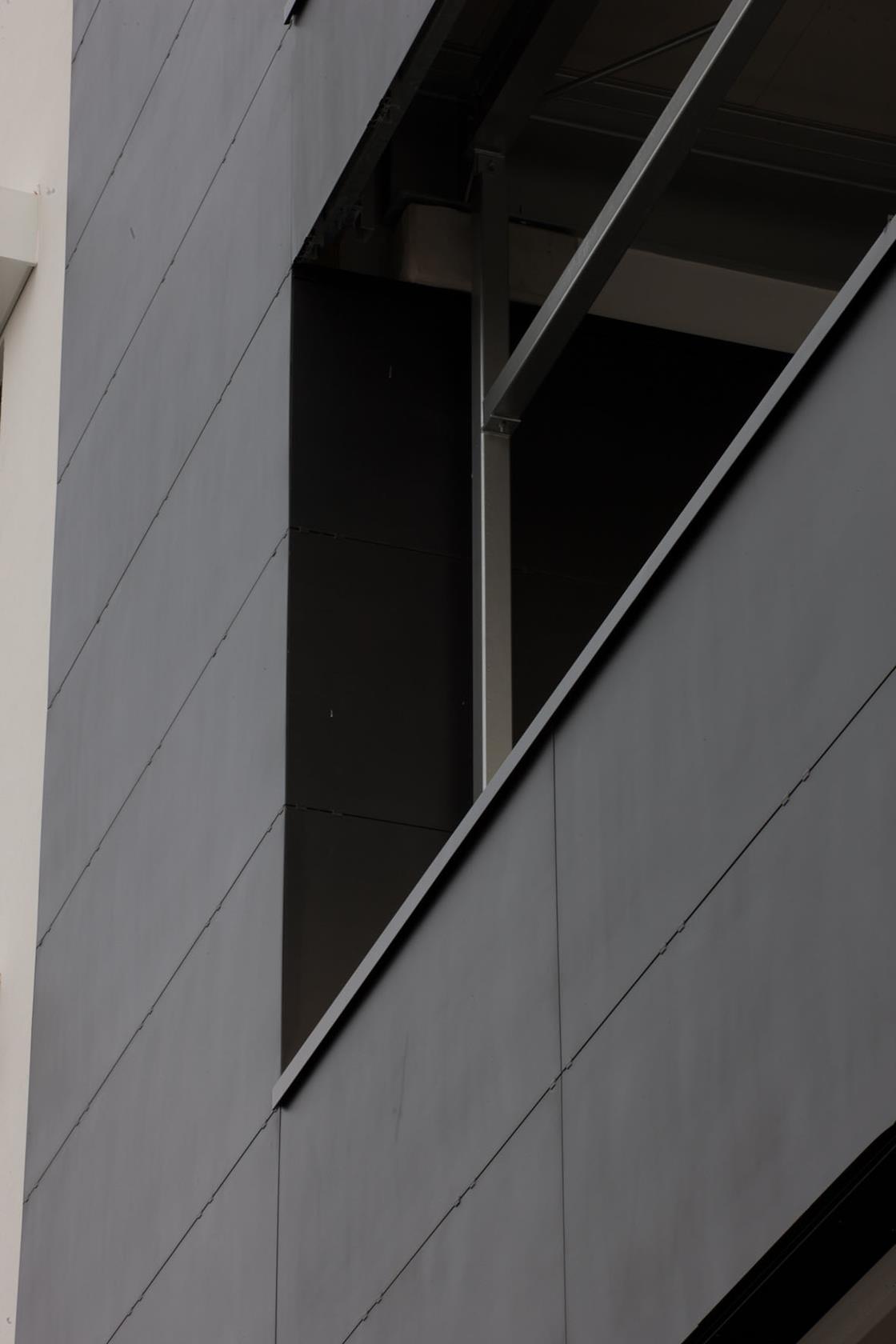
Lea Slimtech is ideal for the construction of low-energy buildings. Its extreme lightness, with a thickness of 3.5 mm, and large format make it the technically most suitable material for ventilated walls and external thermal insulation systems. As in the Lamborghini Protoshop project, where part of the façade is made with a ventilated wall system to meet all thermal and acoustic requirements and maintain an optimal level of innovative construction. The choice of quality materials capable of remaining unchanged over time and requiring very little maintenance was essential. The special Slimtech laminated porcelain stoneware slabs, laid horizontally with an exposed anchoring system, in the large 3 x 1 m format and in the “Lamborghini Black” colour finish created specifically by Lea Ceramiche for this project, perform multiple roles in an exemplary way: aesthetic, functional and technical.
Protoshop, an outstanding project within the broader path undertaken by Lamborghini and Audi to become zero-impact, “CO2-free” companies, is capable of reducing CO2 emissions into the atmosphere by almost 33,000 kilograms per year and contributing to energy savings of more than 53,000 kWh annually, an energy efficiency level well above the requirements of Law 1362/2010. Compared with conventional industrial buildings of the same size, the energy saving calculated in terms of the number of trees “needed” to offset CO2 emissions would require 200 trees for standard buildings and only 80 for Protoshop.
The energy savings that place the building in Class A are also achieved through the installation of an insulating envelope covering every single part of the building, from the cladding of the foundations to the roof details. Large glazed surfaces, made of triple-layer polycarbonate installed with a double chamber and solar refraction reduction filters, produced by Gallina SRL and Lazzaro, ensure proper natural lighting and a high level of thermal insulation: essential characteristics for a space dedicated to prototype development. The design and construction times were equally high-performing: less than 15 months from the first project draft to the inauguration, and 300 days from the start of construction to completion, perfectly in line with a company accustomed to high speeds. The construction site management by Prospazio, which created a team of twenty designers and technicians with an average age of 35 for the occasion, was also fully digitised through a new iPad application. The application, custom-designed for this project and later adopted as a new company standard, simplifies the coordination of the complex network surrounding the construction site, made up of designers, the client and the many companies involved in the construction of the building. All drawings, accounts, site photographs and, in general, all contract documents were continuously updated as the work progressed, coordinated and shared with all parties involved, ensuring efficiency, speed and transparency.
By subscribing to the newsletter, you will receive exclusive promotions dedicated to you.